

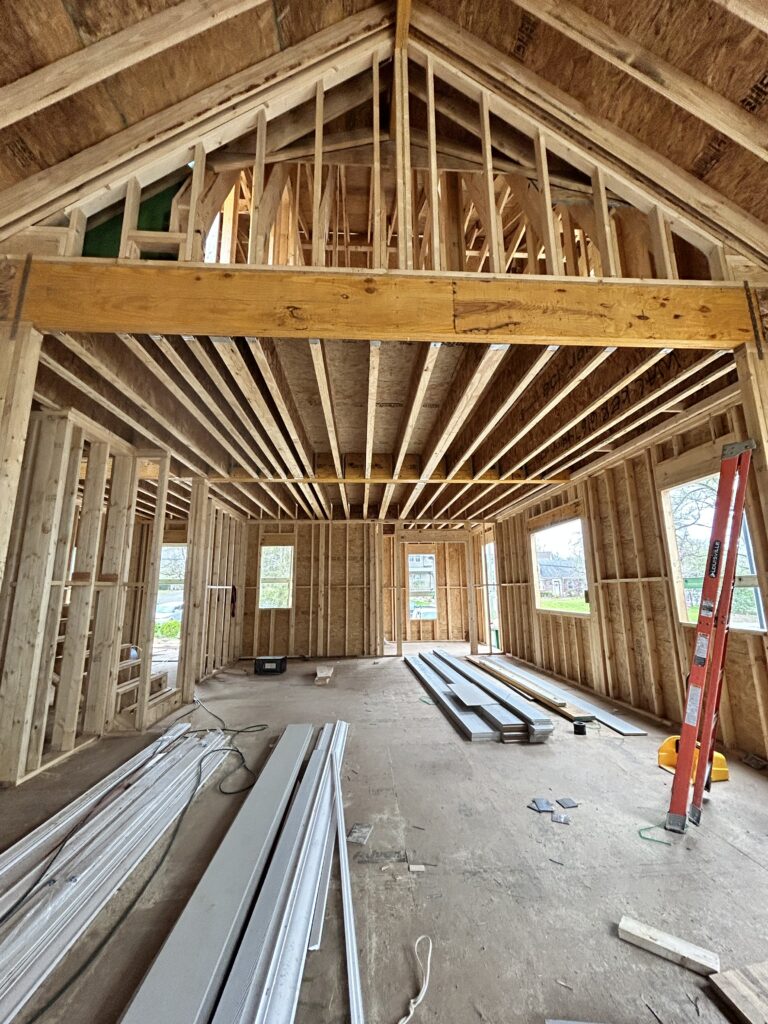
If you’re beginning construction on a new home, the framing stage can feel like things are finally moving. Walls are going up, rooms are taking shape, and it’s exciting to see your home come to life.
But framing is also the point where many homeowners realize they needed to make more decisions earlier.
A lot happens behind your walls, plumbing, electrical, lighting, HVAC, structural blocking, and once framing is complete, changes become more expensive, more complicated, and sometimes impossible without compromise.
If you’re in the early stages of planning a new construction home, here are three things you need decided before framing begins to protect your budget, your timeline, and the final result.
1. Selections (You May Think You Have Time, But You Don’t)
Selections are often underestimated at this stage. Many homeowners assume they can figure these out later, but framing depends heavily on knowing what’s going inside the walls.
Before framing goes up, we need clarity on things like:
- Where toilets, sinks, and showers are located
- Whether toilets need electrical for bidets
- If your shower includes a rain head, multiple shower heads, or body sprays
- Where appliances will live, and whether they need water, gas, or dedicated electrical
- Any specialty features being inset into the wall, like a built-in coffee maker or appliance garage
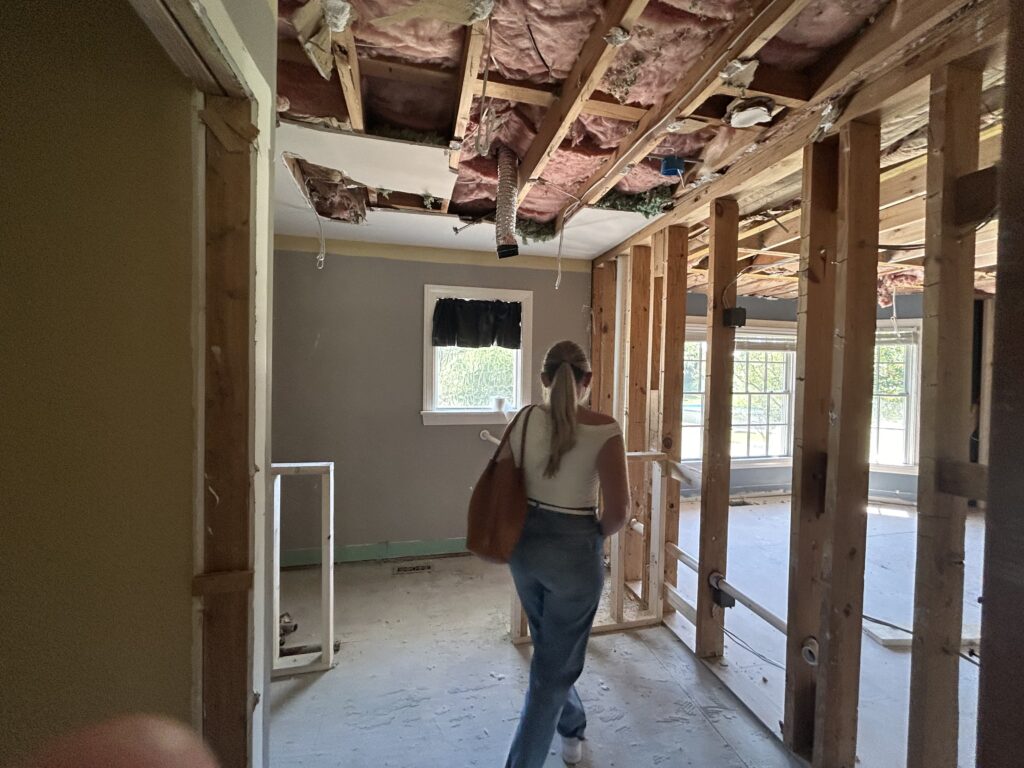
When these decisions are made during or after framing, trades may need to reroute wiring between studs or move water lines entirely. That costs time and money, and it often pulls budget away from places you’d rather spend it.
This stage is about thinking ahead. Even if finishes aren’t finalized, functionality needs to be. The more intentional the planning now, the smoother everything that follows will be.
2. Design (Not Just Layout, but Key Architectural Decisions)
Selections are often underestimated at this stage. Many homeowners assume they can figure these out later, but framing depends heavily on knowing what’s going Design isn’t only about finishes or furniture. Before framing, there should be clear direction on major architectural elements.
This includes decisions like:
- The overall hood design in the kitchen
- Fireplace wall proportions and materials
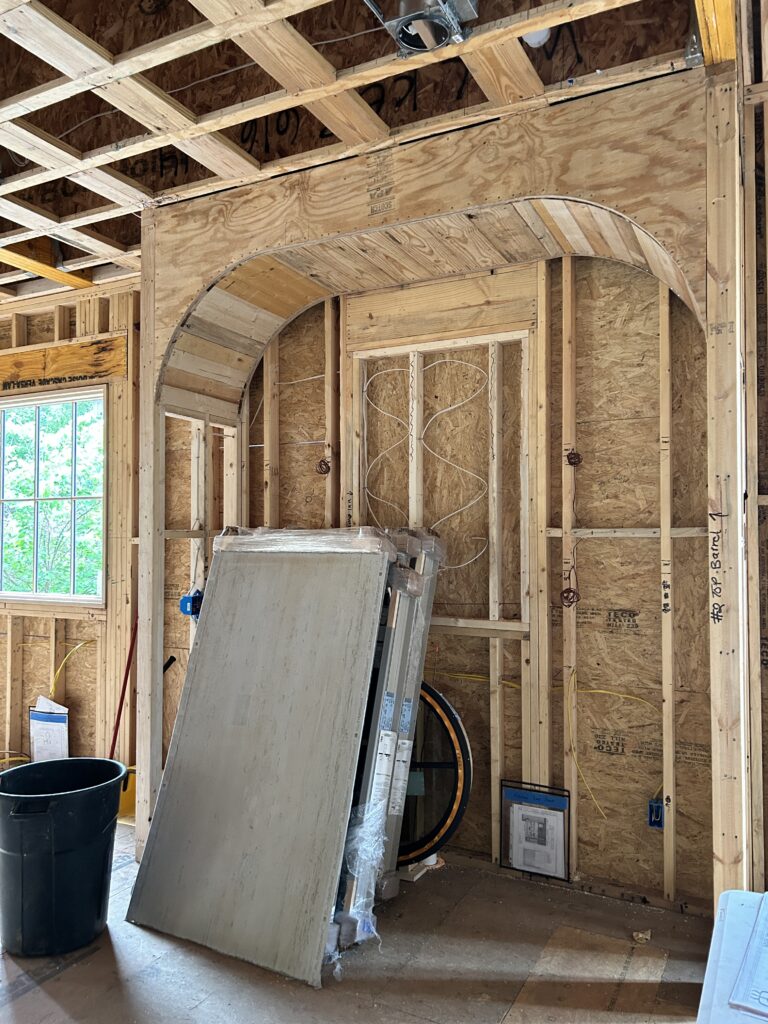
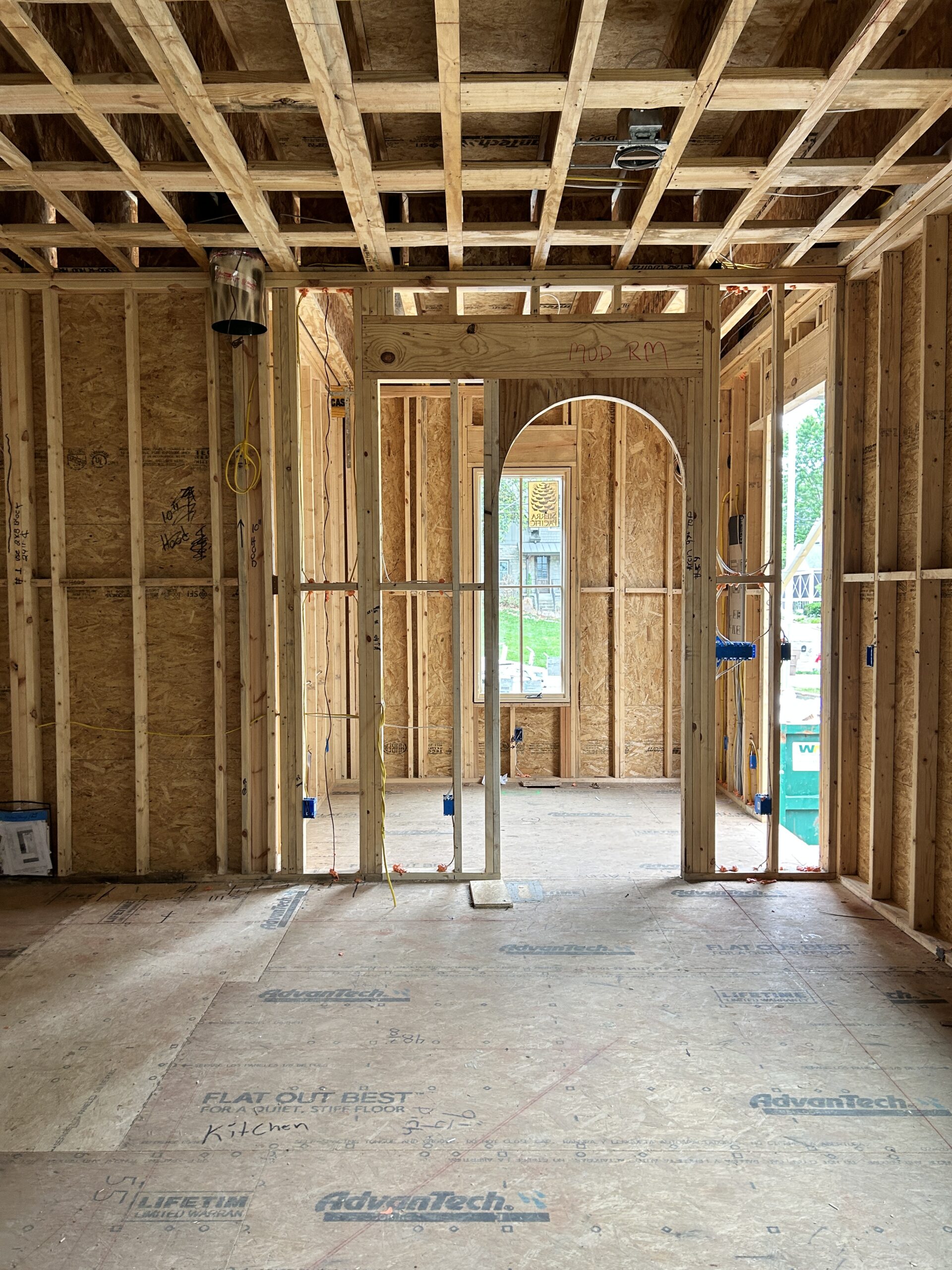
- Doorway details, including arches, cased openings, or flush hidden doors
- Any moulding or wall detail that impacts framing depth
Having these elements designed early gives the framing team exact dimensions to work from. Adjusting them later almost always means added cost, and those costs often come from parts of the project you were excited about.
Doorways are a great example. If arches or custom trim details aren’t planned before framing, the structure may not allow for them later without compromise.
Design decisions made early aren’t limiting, they’re freeing. They allow the rest of the build to unfold with clarity.
3. Lighting and HVAC (The Details You Notice After Drywall)
Selections are often underestimated at this stage. Many homeowners assume they can figure these out later, but framing depends heavily on knowing what’s going Lighting and HVAC planning is one of the most overlooked pre-framing steps, and one of the most noticeable when it’s done incorrectly.
Lighting needs to be designed intentionally before framing so that:
- Pendants can be evenly spaced over an island, regardless of joist placement
- Heavy fixtures, like entryway chandeliers, have proper blocking for support
- Can lights (often called puck lights) are placed with cabinetry, furniture, and room proportions in mind
Without a lighting plan, electricians often place fixtures where it’s easiest, not where it looks best. That can result in lights that are slightly off-center, or perfectly centered until cabinetry goes in and suddenly they’re not.
These are the kinds of details that don’t seem important until drywall goes up and the room no longer feels quite right.
The same goes for HVAC. Vent placement, returns, and ceiling elements all need to work alongside the lighting and design so nothing feels like an afterthought.
Why This Planning Matters
These are the conversations I walk through early in the design process so that by the time framing begins, the contractor has clear, detailed direction for every room.
When trades know exactly what’s happening, installations are done correctly the first time. Fewer changes. Fewer surprises. A smoother build overall.
Good design doesn’t just show up in the finished photos. It shows up in the planning, long before the walls are closed.
Building a home is too big of an investment to leave these decisions to chance. If you’re early in the process and want guidance before framing begins, I’d love to walk through your plans with you.
