

Cabinet hardware is one of those decisions that seems small — until it isn’t.
It’s touched every single day. It’s at eye level. It reflects character. It can lean modern, traditional, playful, or refined with just a slight shift in shape or finish.
And placement? Placement is what makes it feel intentional instead of accidental.
If lighting is the jewelry of a home, hardware is the layering piece that ties everything together.
Below, I’m walking through how I approach hardware selection, sizing, mixing metals, and placement so your cabinetry feels cohesive and considered.

First: Let’s Talk Placement
There isn’t one “right” placement — but there is a right placement for your cabinetry style.
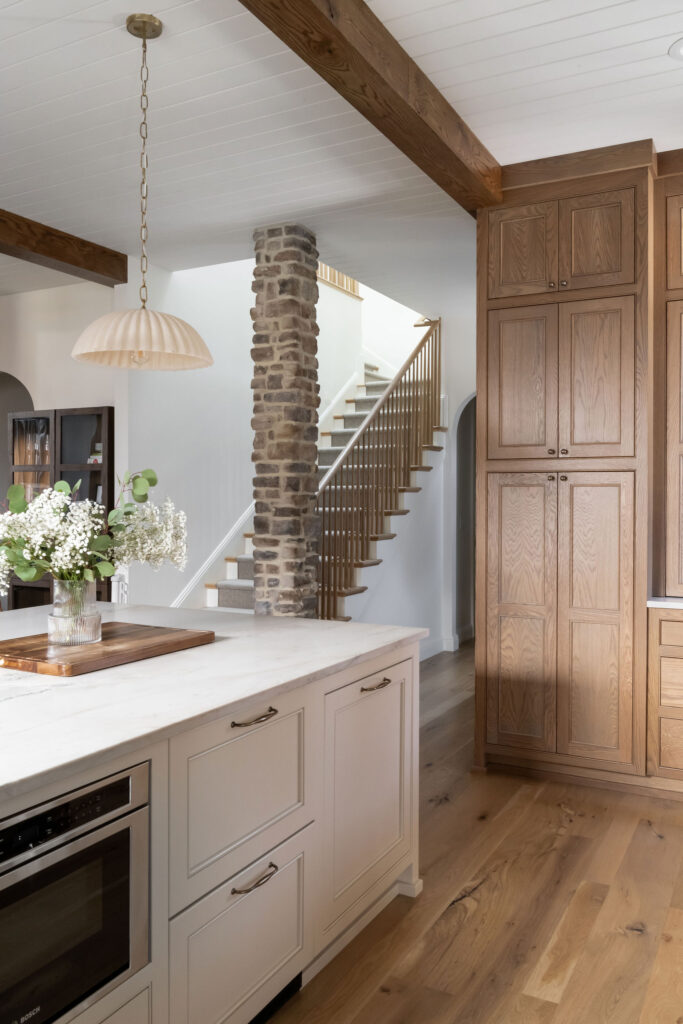
In the visual guide I created above, you’ll see a few of the most common (and most timeless) options.
Upper Cabinets
For shaker-style doors especially, I typically choose one of three placements:
- In line with the rail – The knob or pull aligns with the bottom rail of the door frame. This feels classic and clean.
- On the rail – Placed directly on the lower horizontal rail. Slightly more traditional.
- Slightly above the rail – A subtle shift upward that can feel more tailored and intentional, especially in modern spaces.
The key is consistency. Once we choose a placement strategy, we repeat it throughout the space so nothing feels random.
Drawers
Drawer placement shifts depending on scale:
- Centered – A single pull centered on smaller drawers. Simple and timeless.
- Double hardware on thirds or halves – Ideal for wide drawers. This distributes visual weight and feels balanced.
- Upper rail placement – Especially on slab drawers, placing hardware higher can feel elevated and design-forward.
Proportion matters more than rules. A 48-inch drawer should not have the same hardware strategy as a 12-inch one.

Choosing the Right Size Pull
This is where most DIY selections fall apart.
Pulls that are too small feel underwhelming.
Pulls that are too large can overpower the cabinetry.
As a general guideline:
- For standard drawers, I often size pulls at about one-third the width of the drawer front.
- For wide drawers, I’ll either scale up significantly or use two pulls for balance.
- On tall pantry doors or integrated appliances, I often go longer to create vertical emphasis.
The goal is always proportion and rhythm across the entire wall of cabinetry.
Knobs vs. Pulls (Or Both?)
Mixing knobs and pulls adds dimension when done intentionally.
A common strategy I use:
- Knobs on doors
- Pulls on drawers
This creates variation without chaos. It also subtly signals function — your hand intuitively knows what to do.
In more modern kitchens, I may use all pulls for a streamlined look. In more layered or traditional spaces, I’ll mix shapes for character.


Mixing Metals Without Making It Messy
Yes, you can mix metals.
No, it shouldn’t feel accidental.
When I mix metals in a space, I anchor one as the dominant finish and layer the secondary finish thoughtfully. For example:
- Brass plumbing with polished nickel hardware
- Black lighting with aged brass cabinet pulls
- Stainless appliances with warm unlacquered brass accents
The trick is repetition. If I introduce a second metal, it shows up in at least two places.
Balance creates cohesion.
Hardware Brands I Trust
When I’m specifying hardware, quality matters just as much as aesthetics. These are brands I consistently return to:

Top Knobs:
Reliable, well-constructed, and available in a wide range of styles and finishes. This is often my go-to when I need variety without sacrificing durability.

Rejuvenation:
Great for classic silhouettes and warm, heritage-inspired finishes. Their pieces feel thoughtful and timeless.
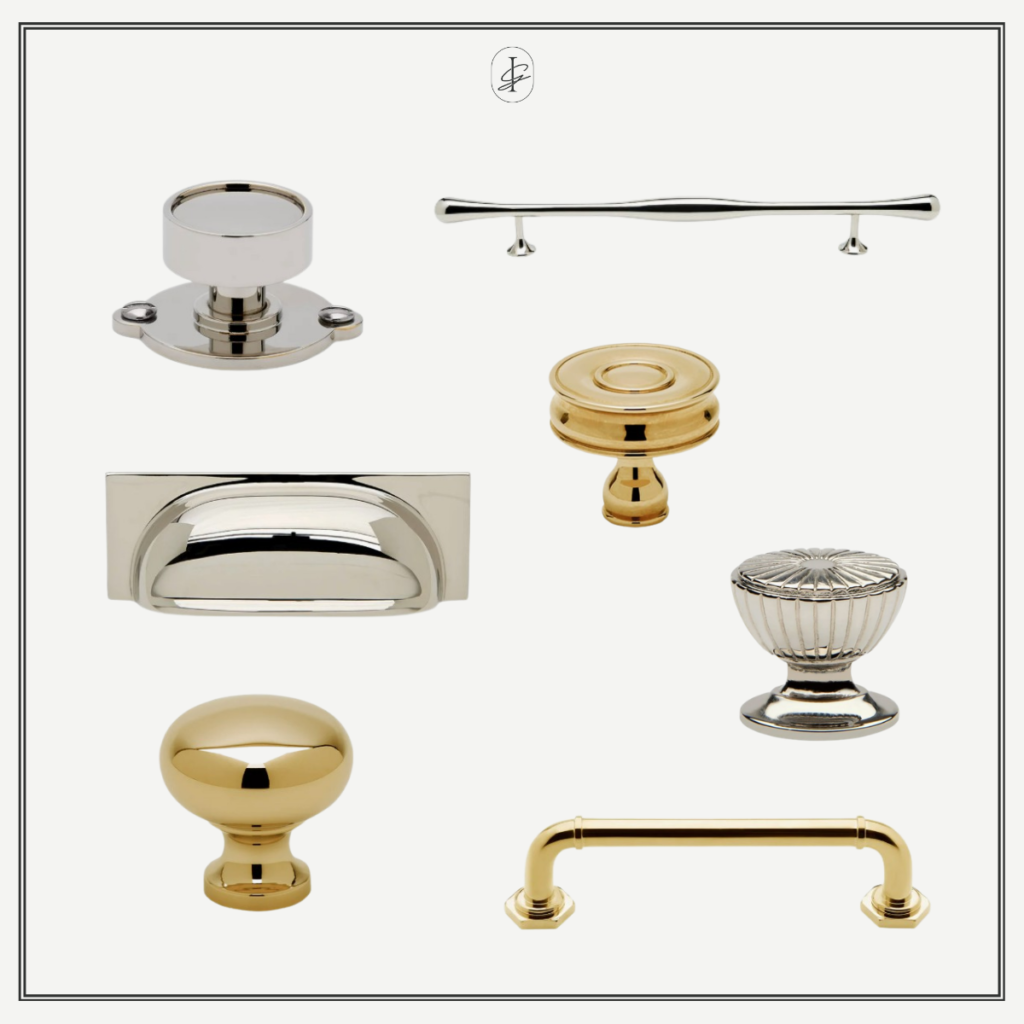
Waterworks:
If I’m designing a space where every detail needs to feel elevated, Waterworks hardware delivers. The weight, finish, and craftsmanship feel intentional and refined.
Good hardware has weight to it. It doesn’t feel hollow or temporary. Because these are pieces you’ll use daily, that tactile quality matters.
Ready to Make Confident Selections?
If you’re building or renovating and want your cabinetry to feel intentional from the start, I’d love to help you design a home where every detail works together beautifully.