

Countertop Edges: What’s Standard, What’s Worth the Upgrade, and What Most People Don’t Know
When most people think about countertops, they’re focused on the material and color.
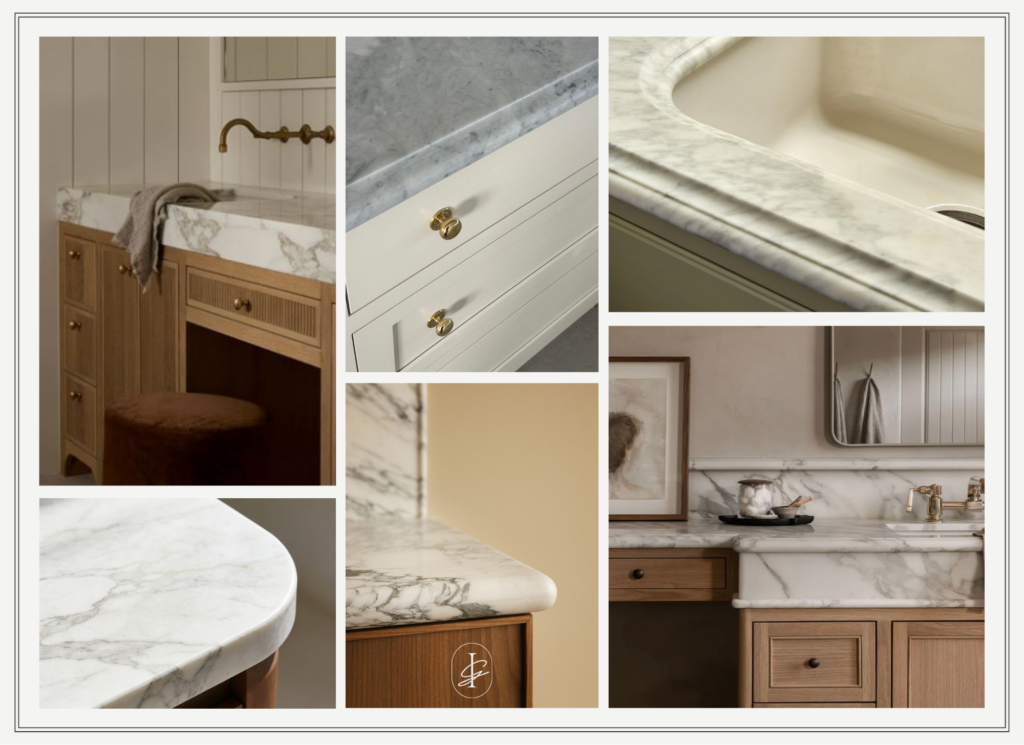
But one of the details that quietly changes everything is the edge profile.
It’s subtle, but it’s one of those decisions that can make your kitchen feel either builder-grade… or completely custom.
And it’s also where pricing can start to shift quickly, often without clients fully understanding why.
Let me walk you through what’s standard, what’s considered an upgrade, and a few details that are worth knowing before you finalize your selections.
The Standard Edge (and Why You See It Everywhere)
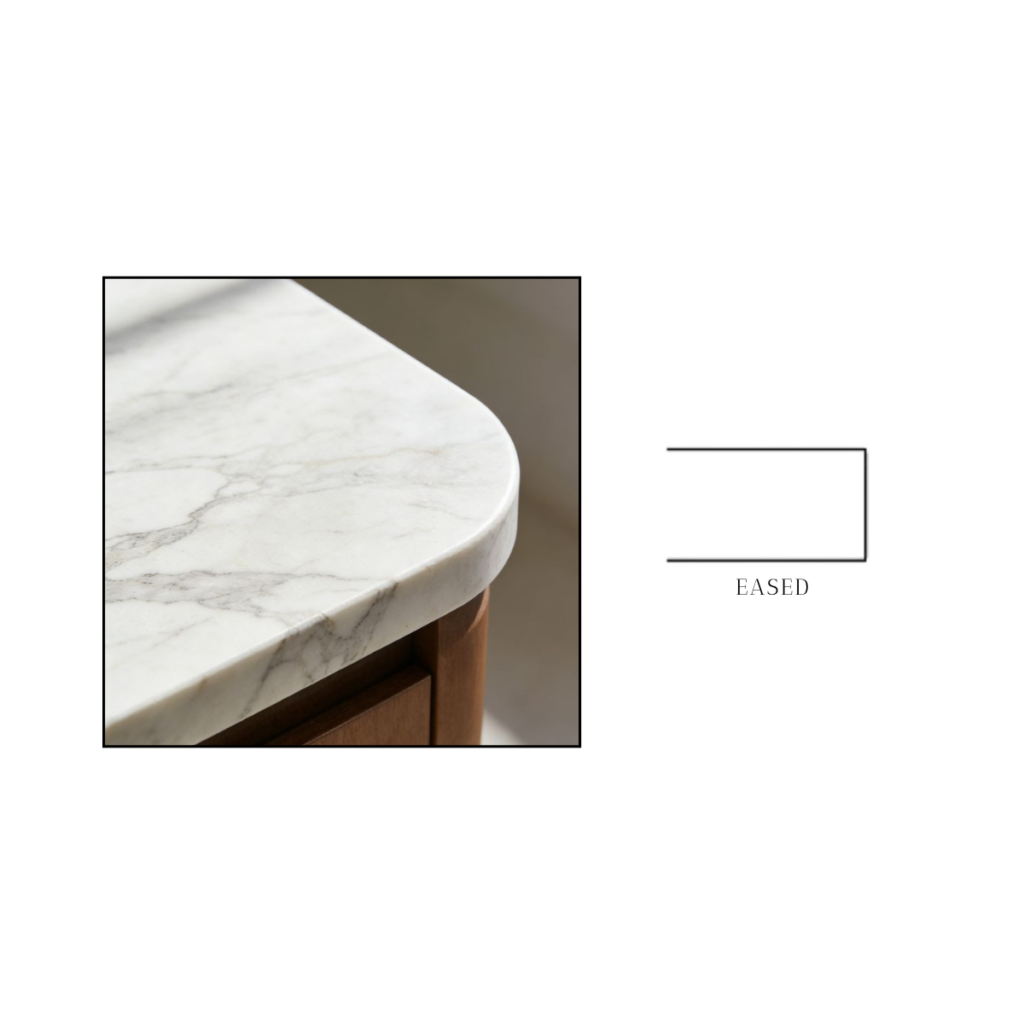
Most countertops you see are finished with a standard eased edge.
This is a simple, slightly softened square edge. Nothing ornate, nothing dramatic.
There’s a reason for that:
- It’s clean and works with almost any style
- It’s included in base fabrication pricing
- It minimizes chipping compared to sharper profiles
If you’re building or remodeling and no edge is specified, this is usually what you’re getting.
And honestly, there’s nothing wrong with it. In the right design, it can feel intentional and minimal.
When an Edge Becomes an Upgrade
Once you move beyond that simple eased edge, you’re typically stepping into an upgrade category.
This might include:
- Beveled edges
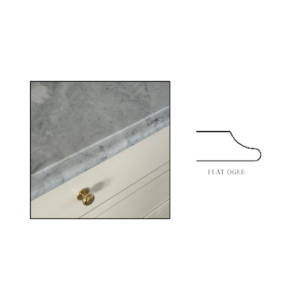
- Ogee edges
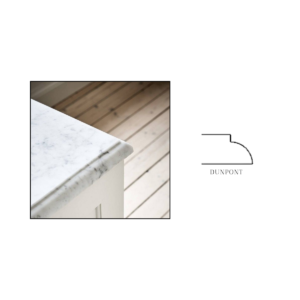
- Dupont or more decorative profiles
These require more labor from the fabricator, which is why you’ll usually see an added cost per linear foot.
But here’s the part most people don’t realize:
More decorative doesn’t always mean more elevated.
In fact, in a lot of natural modern homes, I’m often steering clients away from overly detailed edges. They can start to feel dated or too traditional depending on the space.
The “Thick Slab” Look Everyone Loves (But Isn’t What It Seems)
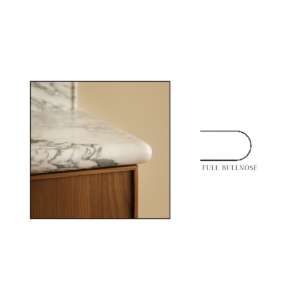
One of the most requested details I see right now is a thicker countertop edge.
It feels substantial, custom, and elevated.
But in most cases, that thick look isn’t a full slab.
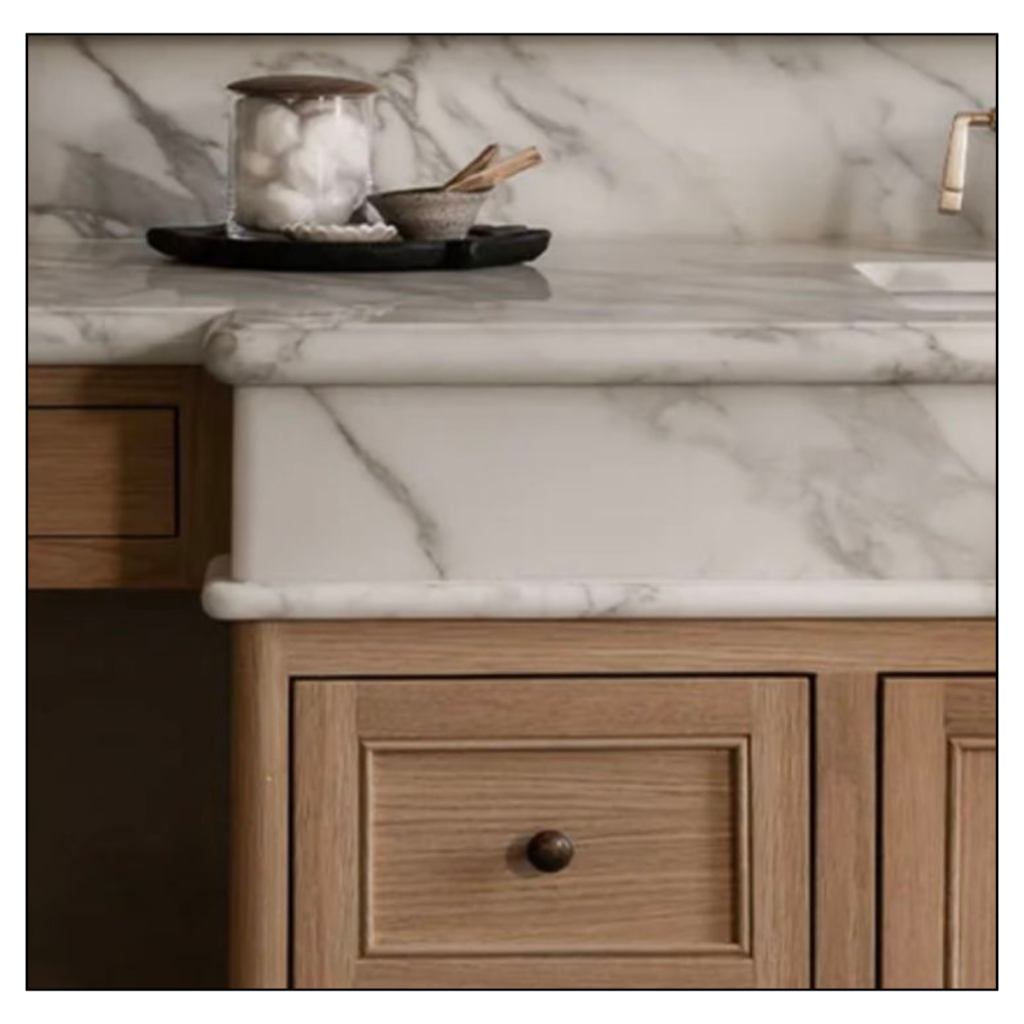
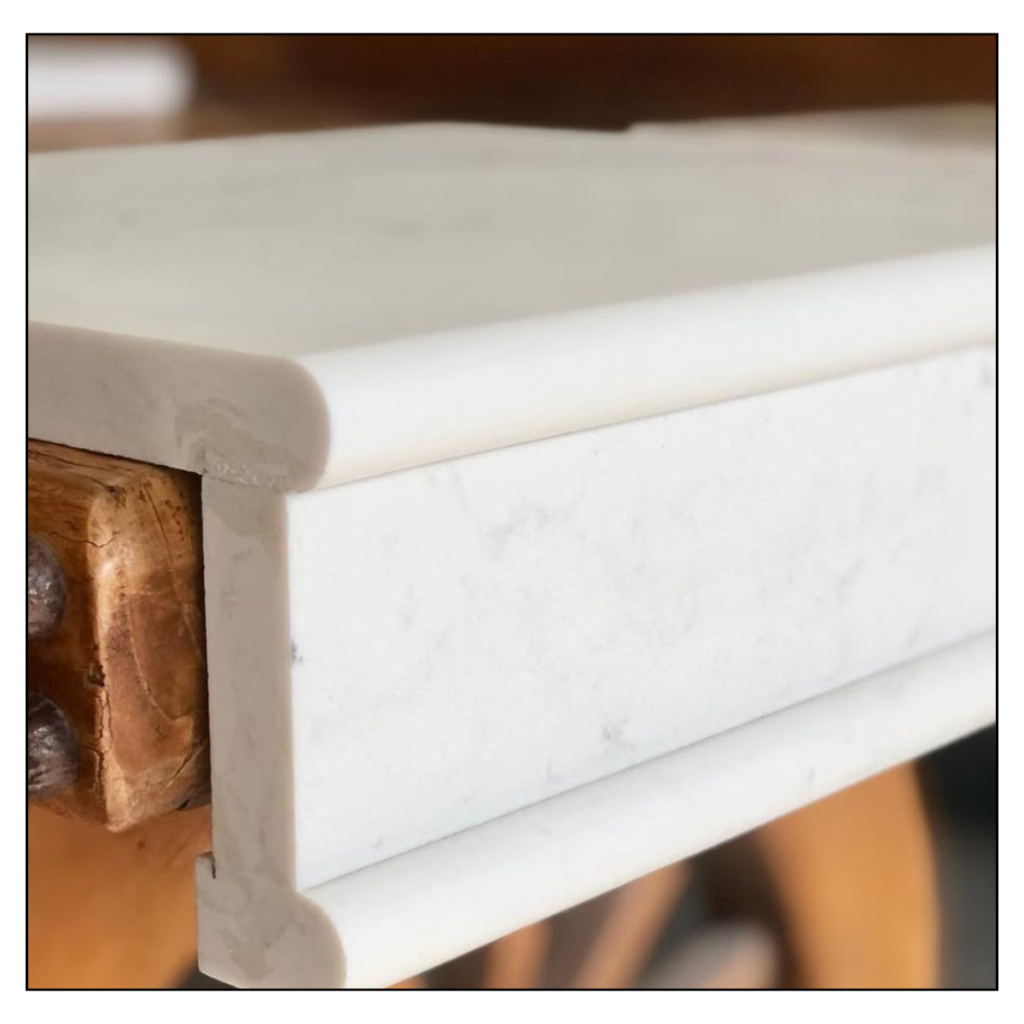
It’s created using a technique called a mitered edge.
What that actually means:
The fabricator cuts the stone at a 45-degree angle and joins pieces together to create the illusion of a thicker slab.
This allows you to get that 2–3 inch thick appearance without the weight and cost of using an actual full-thickness slab.
It’s one of those behind-the-scenes details that completely transforms the final result.
And when it’s done well, you don’t even notice the seam.
Apron Fronts and Waterfall Details
Mitering is also how you get those seamless apron fronts or waterfall edges that feel like the stone is wrapping the cabinetry.
This is where fabrication becomes more like craftsmanship.
Instead of just placing a slab on top, the fabricator is building dimension and continuity into the design.
These details are always considered upgrades, but they’re often the difference between a kitchen that looks finished… and one that feels fully designed.
Marble Sink Fronts and Fully Integrated Sinks
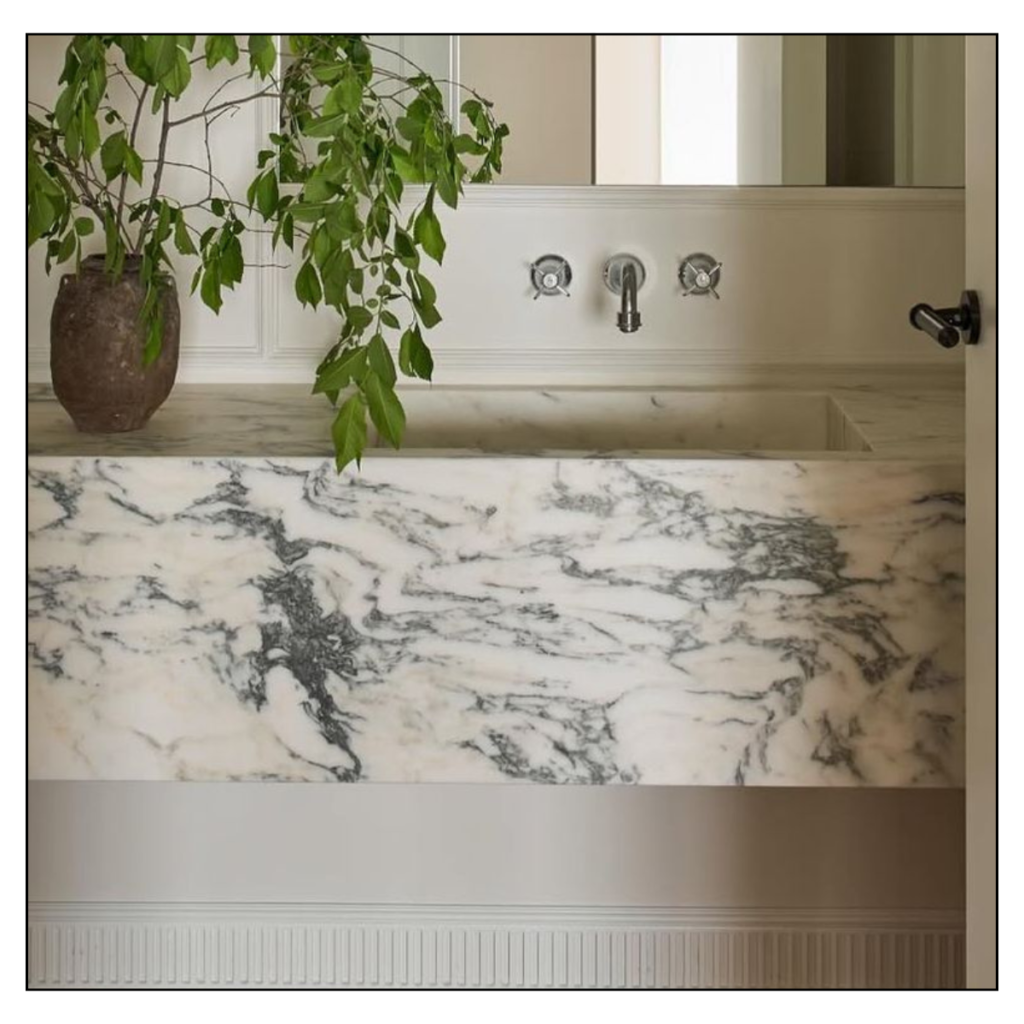
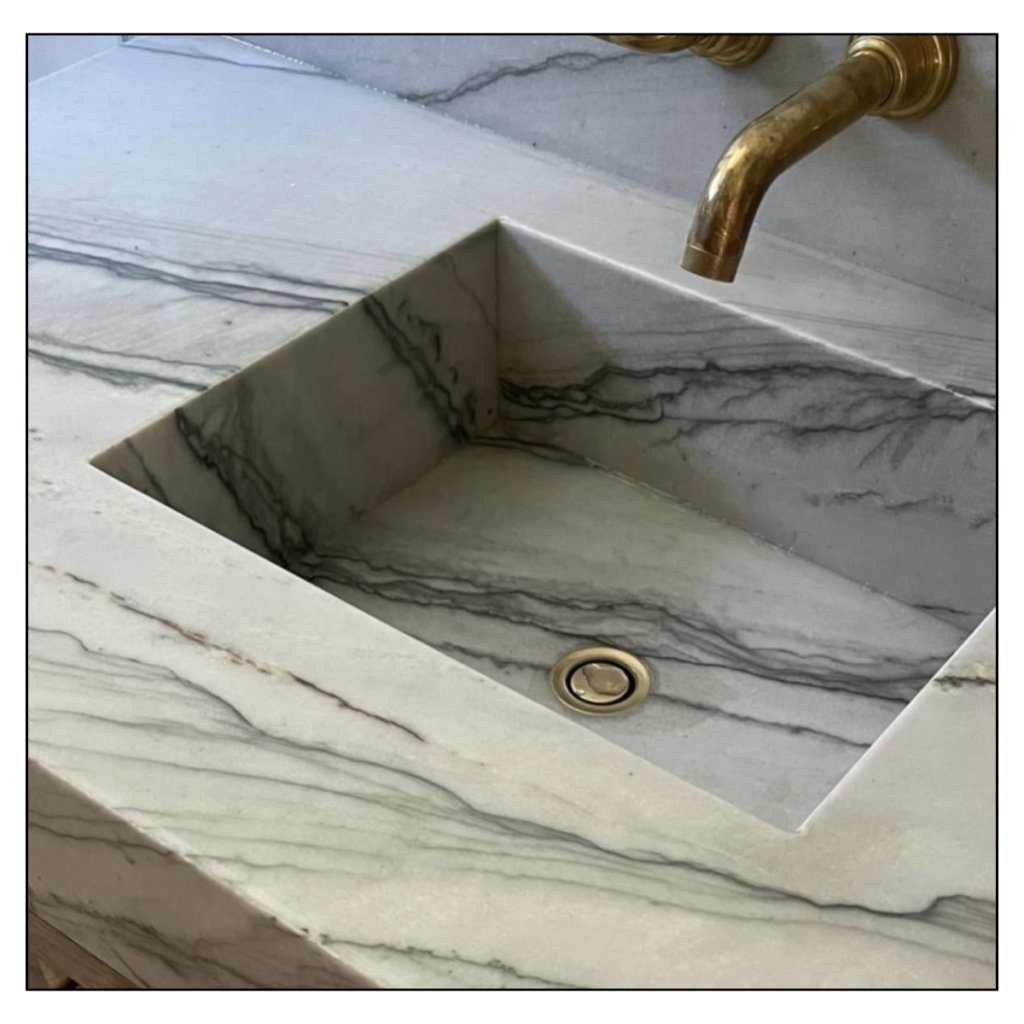
If you’ve ever seen a kitchen where the sink looks like it’s carved from the same slab as the countertop, that’s because it often is.
There are a few ways this can be done:
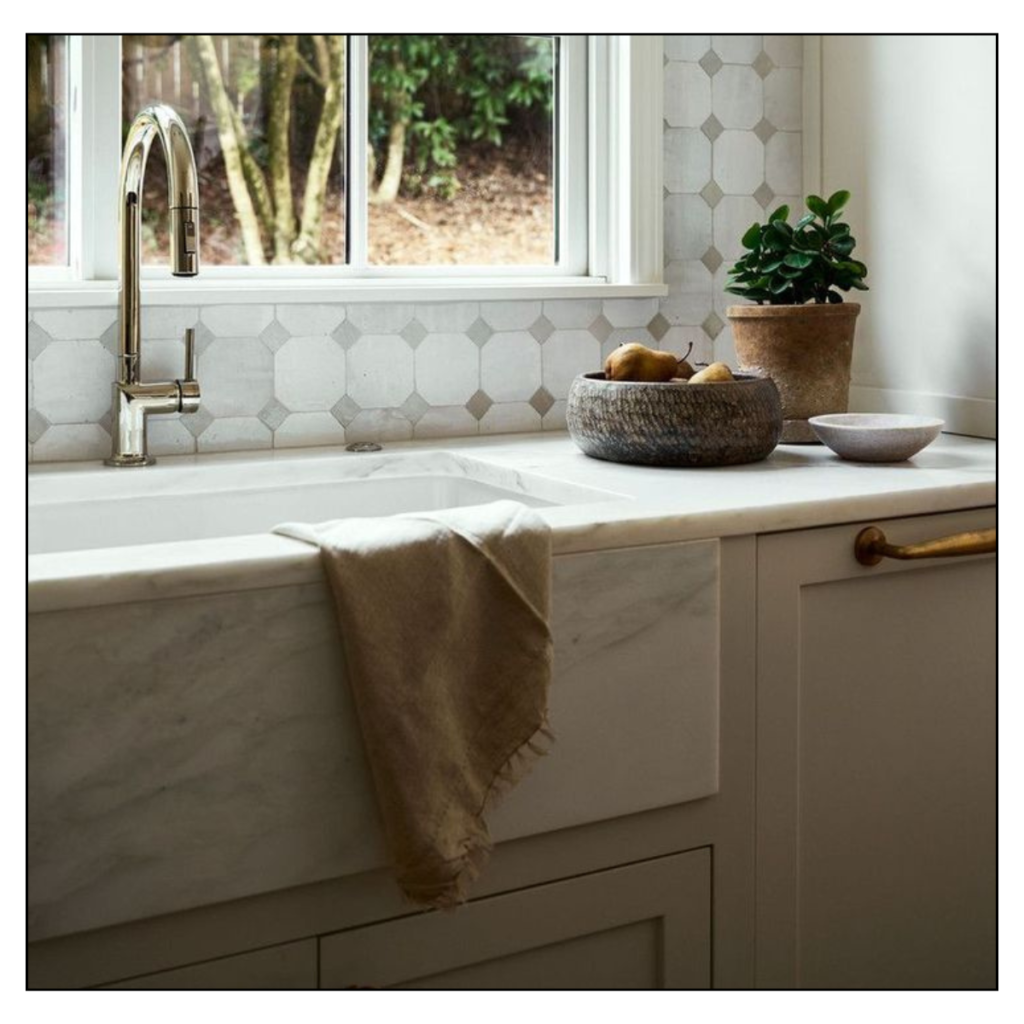
1. Marble Sink Apron Front
This is where the vertical front of a farmhouse sink is clad in the same stone as the countertop.
It creates a really beautiful, cohesive focal point.
2. Integrated Stone Sink
This is a fully custom sink fabricated from the same material.
The seams are carefully joined, and the interior is shaped and finished by hand.
It’s one of the most elevated details you can add to a kitchen.
It’s also one of the most labor-intensive, which means it comes with a higher price point.
But when done right, it feels incredibly custom and timeless.
So… What’s Worth It?
This is usually the question behind all of this.
And the answer depends on where you want to create impact.
If your goal is a clean, understated kitchen:
- A standard edge may be exactly the right choice
If you want something that feels more custom:
- A mitered edge or apron detail can completely elevate the space
If you’re designing a true focal point:
- Integrated stone elements can take it to another level
The key is making these decisions intentionally, not just selecting from a list at the fabricator.
Countertop edges are one of those details that don’t scream for attention, but they absolutely shape how a space feels.
And they’re also one of the areas where I help clients make thoughtful decisions, balancing cost, durability, and overall design.
Because the goal isn’t just to choose something that looks good.
It’s to create a home that feels cohesive, considered, and completely yours.